Patrick Giles
The Vampire Prince’s BridePatrick Giles is the center forward of Uphoria’s werewolf hockey team and the disruptive third point in Piper Diamond and Baxter’s established relationship. He enters the story through the spectacle that Piper would ordinarily rather escape: hockey season, when the Werewolf League consumes Uphoria and even Baxter’s attention is absorbed by the sport. Patrick’s arrival changes that aversion into interest because he does not merely play for the home team; he recognizes Piper and Baxter as the couple he wants for his trois amour, a three-person mating group.
Identity and Introduction
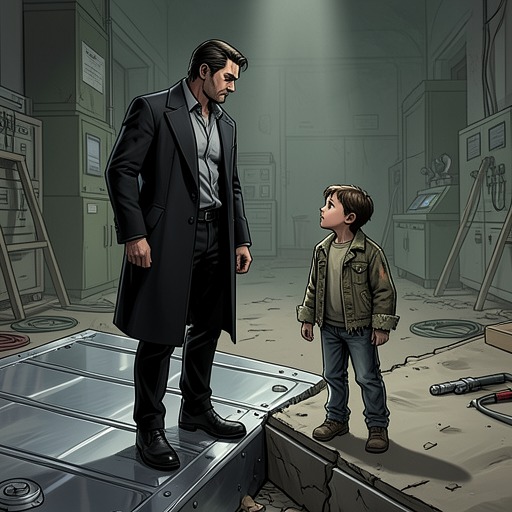
Patrick is presented as a physically imposing werewolf athlete. He stands seven feet tall, is heavily muscled, and has brown hair and brown eyes; his large hands and feet reinforce the scale and strength associated with his body. Yet his first impression is not simply one of physical power. He carries himself with easy confidence, gives Piper an unforced grin, and approaches her in the gallery after Thor Wragge leaves. He identifies himself as Patrick Giles and repeats his name with a widening smile, a small gesture that makes his self-assurance feel deliberate rather than accidental.
His public identity is inseparable from the hockey culture of Uphoria. During the game, Patrick’s team faces another werewolf team in their beast forms, and the match is markedly more violent than human hockey, with snarling players, collisions, and ice that may be stained red. As the Uphoria center forward, Patrick takes possession of the puck and zigzags through the opposing players at a speed that makes him difficult to follow. Baxter shouts until his voice grows hoarse, while Patrick looks toward Piper, flashes his teeth, and winks with a distinctive nod. The gesture turns a public sporting moment into a private recognition between them.
Courtship and the Trois Amour Proposal
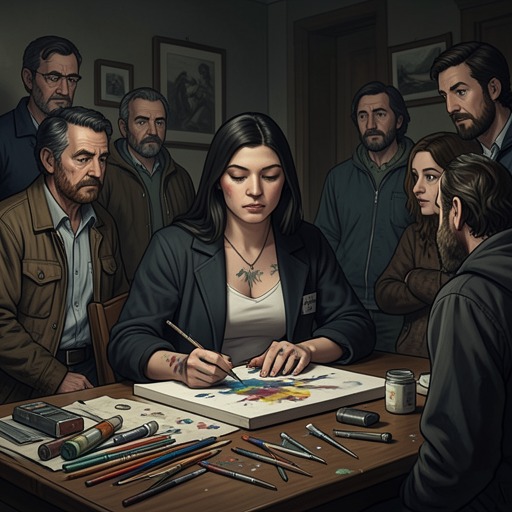
Patrick’s interest becomes explicit after the game. He tells Piper that he saw her in the arena and invites both her and Baxter to a special charity game taking place under the blue moon, offering them two extra tickets. The invitation is not merely social. Patrick also commissions Piper to paint his portrait, praising her eye for shadow and color and offering another five thousand dollars for the work. His approach therefore reaches Piper through several channels at once: attraction, the shared world of werewolf sport, and direct recognition of her artistic ability.
The commission matters because Piper’s gallery is already in financial trouble. Wragge is attempting to buy the business and turn her artistic dreams into cheap reproductions, while vandals and burglars make the gallery an increasingly vulnerable place. Patrick’s money does not erase those pressures, but it gives his attention immediate practical weight. He is not treating Piper merely as the attractive partner of a werewolf couple; he sees her as an artist whose work has value and is prepared to pay for it.
When Patrick meets Piper and Baxter together, the attraction between the two werewolves is visible enough to make Piper uncomfortable. She reminds them that she is present, and Patrick answers that neither of them would ever forget her. He then states his intention directly: he knows they are a mated pair and has been searching for a couple for his trois amour, choosing them as the people he wants. His proposal challenges Piper’s assumption that her bond with Baxter is complete precisely because it is already secure. She loves Baxter and worries that considering another werewolf might make him feel insufficient, even though Baxter is willing to let Patrick join them.
Piper’s hesitation is practical as well as emotional. She has never imagined sharing a life and bed with three people and cannot immediately see how such an arrangement could work. Patrick does not answer her uncertainty with pressure. Instead, he proposes dating first, allowing all three to know one another without demanding an immediate decision. He offers to drive Piper and Baxter home and arranges for his assistant to return Piper’s car. The gesture establishes a pattern in his courtship: direct desire paired with an insistence that Piper retain time and choice.
Material Support and Piper’s Independence
Patrick’s role develops beyond romantic pursuit when Piper confronts the future of her gallery. She considers leaving Uphoria, but Baxter has a job and friends there, and the werewolf community that accepts him is difficult to replace even in a town where roughly a quarter of the population is werewolf. Piper refuses to solve her financial crisis by simply dismantling Baxter’s life. Her decision is described as a moment in which she must grow up and determine what she truly wants.
Patrick responds with concrete assistance. He offers Piper a loan to be repaid through bimonthly payments over five years, then goes further by offering to finance a new gallery for her in the city. He argues that the city would be more profitable and says that he has wealthy friends with a taste for fine art. The proposal links his romantic interest to a recognition of Piper’s professional future: he does not ask her to abandon art for the sake of the relationship, but tries to create circumstances in which the gallery can survive and expand.
This support also complicates the power balance between them. Patrick is a famous and financially capable athlete, while Piper is struggling to keep control of a threatened business. His money could have become another form of pressure, especially after Wragge’s attempt to purchase and cheapen her gallery. By structuring the help as a repayable loan and asking about the timing of a gala opening, Patrick presents himself as an investor in Piper’s independence rather than an owner of her work. The distinction is central to his appeal: he offers rescue without requiring her to surrender the identity she has built as an artist and gallery owner.
Relationships and Conflict
Patrick’s primary relationships are with Piper and Baxter, whose existing mate bond he approaches rather than attempts to replace. He wants Piper and Baxter together, not Piper separated from Baxter. That desire places him within the logic of the trois amour, in which the third partner is meant to join an established emotional and domestic structure. His attraction to Baxter is therefore part of the proposition, not a hidden complication. The visible electricity between the two men when they first size each other up suggests that Patrick’s interest is reciprocal rather than one-sided, while Piper’s reminder that she is there prevents the men’s mutual fascination from making her peripheral.
Baxter is receptive to Patrick’s inclusion and is willing for him to join the pair, but Piper remains the emotional gatekeeper of the decision. Her concern is not that Patrick lacks appeal. He is attractive, confident, attentive, and willing to meet her on both romantic and artistic ground. Her concern is whether a three-person bond can preserve the security she already has with Baxter. Patrick’s willingness to proceed gradually gives the relationship a way to develop without forcing Piper to treat uncertainty as rejection.
Patrick also stands in contrast to Thor Wragge. Wragge sees the gallery as an opportunity to control its future and turn Piper’s art into inexpensive reproductions. Patrick sees the same woman as an artist whose command of shadow and color deserves a portrait commission and a more profitable gallery. Both men bring money into Piper’s crisis, but their forms of power differ: Wragge threatens appropriation, whereas Patrick offers a loan, patronage, and a future in which Piper’s work remains valuable on its own terms.
Change and Narrative Significance
Patrick transforms hockey from the unwanted background noise of Piper’s hometown into a doorway to romance. Before he appears, the sport represents the way werewolf culture occupies every part of her life and distracts Baxter during hockey season. Once Patrick looks up from the rink and winks at her, the game becomes personally charged. Her pulse quickens, and the arena’s violent communal spectacle acquires the intimacy of a summons.
His larger significance lies in the way he tests the boundaries of an already successful bond. Piper does not need to be rescued from an empty life: she is already mated to Baxter, already an artist, and already committed to preserving the gallery. Patrick’s presence asks whether those achievements can expand rather than be replaced. His proposal, his patience, his portrait commission, and his financial plan all push the same question from different directions. Love may be an addition, but addition becomes meaningful only if Piper’s agency, Baxter’s place, and her artistic ambitions remain intact.
The available account does not provide a final independent resolution for Patrick beyond his proposal and support, but it establishes the direction of his arc clearly. He begins as the charismatic center forward glimpsed through the speed and violence of a werewolf hockey game; he becomes a suitor who openly seeks a shared mating group; and he ultimately acts as a practical ally to Piper’s threatened gallery. Patrick’s importance is therefore not limited to being the desired third werewolf. He is the figure who makes Piper reconsider both her emotional limits and the economic future of her art.